
Better Prompts, Better Health: Using AI Without Losing the Human Touch with Dr. Lucy McBride, MD
about the episode
Artificial intelligence is rapidly changing healthcare, but is it making us healthier or simply giving us faster answers? In this episode of Innovate & Elevate, Sharon Kedar sits down with Harvard-trained internist Dr. Lucy McBride to explore how AI is reshaping the patient experience and why asking better questions may be more important than finding quicker answers. Together, they discuss the growing gap between modern healthcare and the wellness industry, the role of primary care physicians in an AI-enabled world, and why personalized medicine will always require understanding the person behind the diagnosis.
This Episode Is For You If:
- You're curious about how AI tools like ChatGPT and Claude can help you make better healthcare decisions.
- You want to become a more informed, empowered patient without relying solely on the internet for medical advice.
- You're interested in the future of women's health, personalized medicine, and why better questions often lead to better care.
Jessica Federer
About dr. lucy mcbride, md
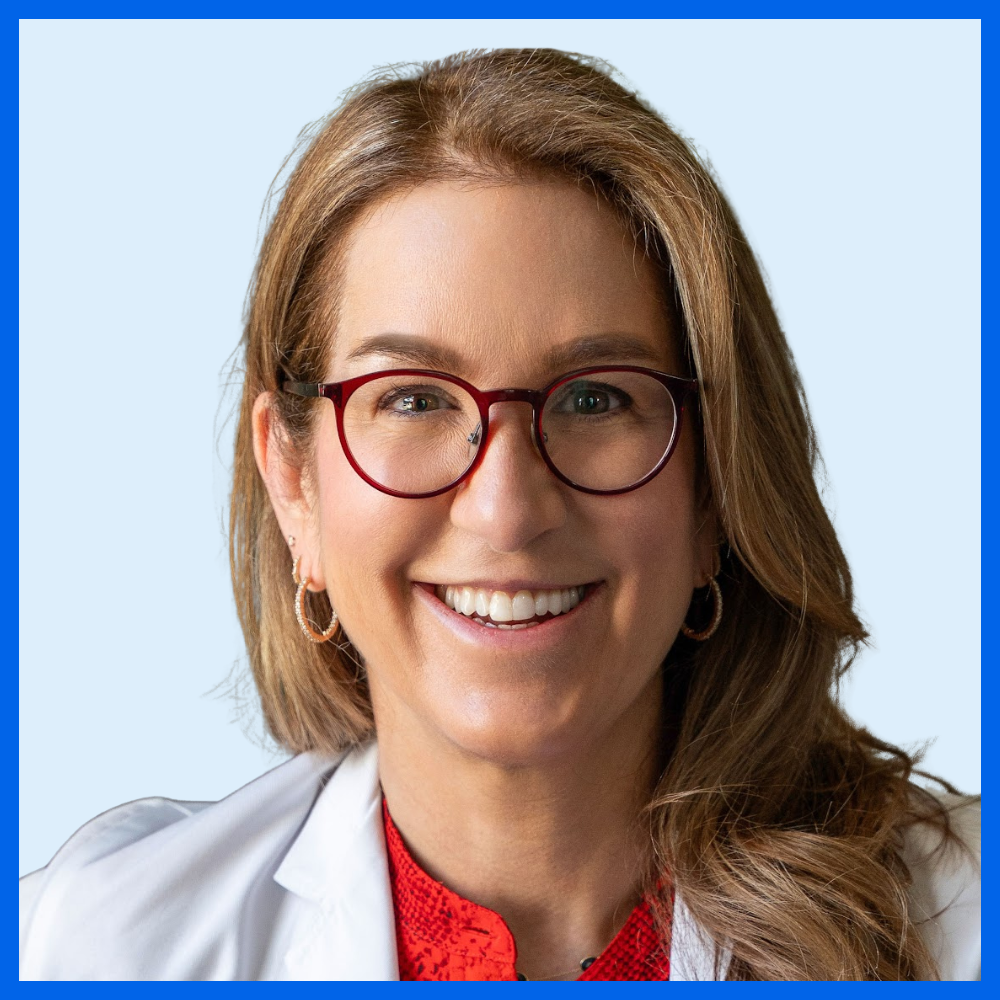
Dr. Lucy McBride, MD, is a Harvard-trained internist, practicing physician, and nationally recognized expert in whole-person health. She is the founder of Lucy McBride Integrative Medicine, creator of the Are You Okay? movement, and author of Beyond the Prescription. Drawing on more than 25 years of clinical experience, Dr. McBride helps patients better understand the connections between physical health, mental wellbeing, lifestyle, and everyday decision-making while advocating for a more personalized approach to modern medicine.
Connect with her on LinkedIn and Instagram. Visit her website here. Learn more about Beyond the Prescription book here.
Episode Outline
(00:00) Why Patients Turn to AI
(02:20) Treating People, Not Diseases
(03:48) Women's Health Is Unique
(06:25) AI Enters the Exam Room
(08:58) Why Better Questions Matter
(11:12) When AI Gets It Wrong
(13:58) Where AI Can Improve Healthcare
(15:09) How Patients Should Use AI
(17:28) Teaching the Next Generation
(18:50) Beyond the Prescription
-
Sharon Kedar CFA: Please welcome Dr. Lucy McBride to the podcast. I am so excited to have her on. We're gonna unpack AI and the health of women. And we are going to talk about what we need to know.
Dr. McBride is an internist, Harvard Medical School-trained, and she is the author of the new book coming out August 12th, everyone go get it, Beyond the Prescription. Dr. McBride, welcome to the podcast
Lucy McBride MD: Sharon, thank you so much for having me. I'm thrilled to be here.
Sharon Kedar CFA: Can you start by telling me a little about why you wrote the book and the impact of AI as we all think about our own health?
Lucy McBride MD: Patients come in; they've been dismissed, through no fault of their doctor, The system doesn't give doctors time with patients. They've been given a prescription and no plan, and they've been treated like a set of transactions instead of a whole person.
And when they don't feel well, the next time, they go on the internet and they find a whole universe of solutions and answers, and they feel seen by well-intended wellness practitioners. And they end up getting almost equally prescriptive advice and aspirational and sometimes pseudoscientific advice from the internet.
So the average person lives in that middle space between the medical system that's failing them and the wellness industry that's saying, "Come hither," and they just want actionable information and guidance to make everyday decisions about their health. This book is a distillation of my 25 years of patient care, and it's a playbook so that you can become a more empowered patient, whether you're sitting in the waiting room of your doctor's office or in the ER. It's about asking better questions of yourself first and then of the people responsible for your care.
Sharon Kedar CFA: Yeah, you know what's so interesting about that is, I think in our parents' generation there was an assumption that you go to the doctor and receive care. So if you have an issue, like a strep throat or a fever, you go in, you get a prescription.
It's sort of like a one-way receipt. And especially as medicine has advanced, it just seems like you are not simply in receipt of care.
Lucy McBride MD: The most important data in your health doesn't usually live in a lab test or an imaging report. It's about your biography. Who are you? What are your tolerances for risk? What are your personal preferences? What are your health goals? Right? Let's say you're a management consultant.
You wouldn't come up with a strategy for a company's strategic plan before asking the company, "What are your goals? What are your mission, vision, and values?" Right? Same thing with patients.
And by the way, some medical encounters are purely transactional, like sore throat, positive strep test, amoxicillin, you're on your way. But six in 10 Americans are living with chronic illness, which are not one and done conditions. You take type 2 diabetes or obesity or arthritis, cancer, heart disease, kidney disease, COPD.
These are not things you can treat in one setting, and they are all conditions that require the patient to have a deep level of understanding about how their everyday life affects their health outcomes. So health isn't just about the one-time appointment with the doctor. It's about me handing you power so that you can make a decision. Like for example, the smoky air out there.
If you have asthma or COPD, you need to wear a mask. You need to think about HEPA filters. If you're someone who has a history of alcohol abuse, you need to think about risk and risk tolerance in a different way than someone who hasn't had addiction.
So, medicine right now is very skilled at treating disease. It's not skilled at treating the person who owns that disease.
Sharon Kedar CFA: How does it break down? So I've done a fair bit on the health of women. Do you think these lessons apply differently if you have XX, so female, versus XY male biology, or is it the same advice?
Lucy McBride MD: Let's talk about the fact that women were not included in clinical trials until the 1990s. So much of our research is done on the male prototype. Let's acknowledge that the practice of medicine is by definition nuanced. It's personalized, it's individualized. There's no cohort study or population-based data that can capture your unique situation, right?
So my job is to take the available data we have and apply it to the person in front of me.
When it comes to women's health, I think the biggest area of interest right now is in menopause and menopause care. As you know, menopause is, on the cover of New York Times Magazine, and there are movies being made about menopause and, the failure of modern medicine to meet the moment and educate women on what happens to their bodies.
It's interesting 'cause a lot of people are really happy about the menopause discussion. But a lot of women are upset about where the whole health of women sort of situation stands.
Sharon Kedar CFA: Like autoimmune disease, 80% of it's in women, and we don't understand why.
It does feel like we've historically looked at people as a sum of their parts. And if you're on a 15-minute clock, I mean, isn't that just like a complete mismatch?
Lucy McBride MD: Women are completely different entities than men. We have different biology. And so when you're thinking about caring for an individual, you're thinking about their biology, you're thinking about their psychosocial aspects of their health, and then their psychological.
So it's the biopsychosocial model of disease, right? And in every way, women experience being alive differently than men do. So you can have two people with the same cholesterol levels in their 50s, and you can have a man whose cholesterol is high because he's got a genetic predisposition to disease, to high cholesterol, he's eating cheeseburgers and he's not exercising, and you can have a woman with the same cholesterol levels who's eating healthy, exercising, and just is going through menopause, because estrogen depletion tends to elevate cholesterol levels in some women.
So we have to understand the very real biological differences between men and women before we can set out to take care of human beings.
Sharon Kedar CFA: Yeah. I just imagine that just the sheer number of appointments and stuff that you have to do if you're a woman. You need to get mammography if you're over 40 every year, and if you have dense breasts maybe alternate that every six months with your ultrasound, so you gotta write these scripts.
And then if autoimmune's 80% in women, oh, and then go see someone for your HRT. I just imagine you writing more scripts. I think it's like the maintenance... tell me if this is wrong, is more.
Lucy McBride MD: It depends, right? But yes, women carry special unique risks, right? We have ovaries, we have breasts, we have heart disease that we thought only applied to men. Two-thirds of Alzheimer's patients are women. Go figure, right? There's got to be something there related to estrogen.
We have more data to collect on that, but there's some thinking that hormone replacement therapy, that is replacing a woman's estrogen post-menopause, can help protect brain health. So yeah, I mean, women are complicated.
When I was in medical school at Harvard in the late 90s, early 2000s, I was taught only to prescribe hormone replacement therapy to a woman who's absolutely miserable with hot flashes, night sweats, and has such a dry vagina that she can't have sex, and give the least amount of hormone for the least amount of time.
That was just wrong. Because guess what? First of all, it was wrong because hormone replacement therapy doesn't cause cancer. Secondly, quality of life matters, and so much of health can't be measured in a blood test, and when you're sleepless and can't have sex, that doesn't show up in a lab test, but it certainly affects your health.
Sharon Kedar CFA: If you're sleepless, that contributes to so much disease.
Do you find, we'll segue into AI, do you find that when folks are in your office... 'Cause I'm using AI a lot. I won't go into a doctor's appointment now without checking Claude. Do you find that people are coming in with their AI results and then cross-checking it with you? Or how is it being used now? And by the way, is that a real pain in the neck? 'Cause it's probably creating massively more questions.
Lucy McBride MD: I would say that over the past two years, patients have begun arriving in my exam room carrying answers from Claude or ChatGPT. Interpretations of their lab results, differential diagnoses for their fatigue or their brain fog, and opinions on whether to start a statin or a GLP-1. I love an informed patient.
I love someone who's done their research. I really do. Of course, there's too much information sometimes, but it's better in my opinion to be informed than to be just a passive consumer of information. And I don't blame people for looking to AI even when they have me, but certainly in the general population, it's no surprise they're reaching for AI tools given the barriers to personalized healthcare.
I mean, from cost to just being talked over like we were talking about before. The answer is yes. People are coming in more and more with just reams of information. The problem is the US healthcare system and AI are both full of solutions and fixes. You know, like you've got high blood pressure, take a beta blocker.
You've got a stomach ache, see a gastroenterologist. You're tearful and crying, take Prozac. The problem has never been the lack of solutions, and AI is like a master answer generator. It's like answers on steroids. But the art of medicine is surfacing the patient's question to begin with.
So it's the prompt, right? So there's studies out there that showed that AI can outperform clinicians at diagnoses, and that AI alone may be more accurate than physicians. But the problem with these studies is that the methods of studying this question, in every study, the AI bot was handed a curated vignette. So the job of the physician is to help surface the question beneath the question.
Sharon Kedar CFA: Wow.
Lucy McBride MD: Because at the end of the day, you can ask ChatGPT, "Should I be on hormone replacement therapy?" And it will give you a whole bunch of answers. But whether that's the right answer for you depends on what you're actually asking.
Like, until AI chatbots can sit in the shoes of a physician whose job is to accompany people through the various elements of their health to understand the unmeasurable parts of being human and to have those interactions where you're surfacing the questions and getting to the root of what someone's needs are, I think that AI is best served to do the grunt work that we do. I have AI all the time drafting summary letters to my patients, drafting letters to insurance companies to wrangle with them over insurance coverage. I have it working on our back office. I have it doing all the grunt work that does not require a human.
Sharon Kedar CFA: You know what's fascinating about what you said is that AI is supposed to be so sophisticated, but it can oversimplify the question and therefore the answer.
Lucy McBride MD: Well, it answers the patient's question at face value. But question formation is its own art, and requires a medical partner. I mean, that may not be intuitive to people, but, like, AI can certainly answer the question, is amoxicillin the best way to treat strep throat?
It will give you a great answer. It'll give answer faster and with more empathy than a human being. But if you're asking it any question that is nuanced, it's not gonna understand the nuances of your question. Take what people come in to see me for all the time: fatigue, pain, I don't feel well, I can't lose weight.
You can't just say to a chatbot, like, " What should I do about my dementia?" If you don't know you have dementia in the first place. You can't ask a chatbot, like, "How should I treat my weight gain?"
When it's not gonna ask you about your binge eating that happens because you're stressed and you don't eat enough lunch, right?
Sharon Kedar CFA: Or maybe on that one, obviously GLP-1s have been so important. They're also a role, so in that one, it might be a woman, who would get missed for HRT. You're basically saying it could spit out a perfectly correct answer that's wrong for that human.
Lucy McBride MD: That's exactly right. Maybe you don't need a GLP-1, you need self-compassion to have 10 extra pounds on you that you don't want but that is not medically harming you. You actually were underweight for many years. You may not need a new fan, you may need hormone replacement therapy, right?
Like, so you have to be able to ask the right question. And patients, even my most educated patients, they don't know what questions to ask, and my job is to help surface the questions. There's a whole universe of things we have to question about first, like, what's going on? Who are you? What are the aspects of your life that are affecting your health? What are the realities of your life? Like let's say you ask the chatbot, you're like, "I have coronary artery disease, and what should I do?"
It can tell you with great specificity: you should have an LDL cholesterol of 70 or below. That's evidence-based. You need to have your systolic blood pressure under 120, ideally in the 110s. You need to work on inflammation, you need to work on weight management. Well, what are the limitations of your life?
A chatbot can't understand that you live in a food desert, or can't afford your medications, or don't tolerate the statins, or don't even know you don't tolerate the statins. This is basically a plug for the primary care doctor, who ideally is the quarterback, the hub for problem-solving to understand the whole person.
Sharon Kedar CFA: I think right now it is so hard in this country, because of the way the system is set up, to find a primary care doctor who is set up to understand a whole human.
The kind of work you do, it takes time, and so therefore you can get to the question under the question. And I think AI is filling the gap right now in a system where people are like, "Wait, my GP gave me 15 minutes." And I feel really bad for that doctor. I'm sure they wanna spend more time.
You know, I'm super pro doctors, but I think AI basically right now is like Dr. Claude in the face of a gap. But the hazard is that one might not make an appointment, spend the money, and spend the time to really, really, really get to what you're talking about. It would be great to talk about like sort of how AI is helpful, but I think it can just be such a fast lane move.
What you're basically saying is like you're human, and so your fatigue or your stress or whatever it might be, it's like AI can't solve for the life circumstances, and it won't be able to like really put that into the equation.
Lucy McBride MD: It can't integrate across domains. It doesn't know how to ask. And maybe someday it will, but that's gonna require a level of sophistication that I don't think is ever gonna be... I mean, caring for another human being is a uniquely human endeavor.
So the assignment for healthcare reformers is if we're serious about an AI-enabled future of medicine,
we need to point it at the right problem. So deploy AI where the evidence supports it, for documentation, prior auths, triaging my inbox, like records reconciliation.
Sharon Kedar CFA: Diseases too. Like, I mean, with one in eight women getting breast cancer, the survival rate has increased, but I'm like, okay, these women are still going through so much.
Could we AI-enable mammography? Take the fact that it's 1960s technology and hold our nose 'cause yes, it's essential, go get your mammogram. But maybe you like add a blood test that also has AI.
So, what are the ways in which AI can reimagine, how we catch diseases?
Lucy McBride MD: Yeah, it can do the very technical things you're talking about. Reading mammograms, reading MRI. Although if you talk to enough radiologists, breast radiologists, they're not convinced that the computers or that the bots do any better than they do. It depends on the radiologist, of course.
Sharon Kedar CFA: Yeah, I have. I've talked to a few, and I had a couple on season one, so it's really interesting to hear that. Yeah.
Lucy McBride MD: Yeah.
Sharon Kedar CFA: If you were advising a patient on how to use AI, what would you say? What's a smart way to use it?
Lucy McBride MD: So I would use it not to ask it just basic questions, not to be like, "What should I do about weight gain?" Or, "What should I do about X?" I would use it like you're training it to ask you better questions. So my book, Beyond the Prescription, is basically an inventory of questions to ask yourself to then understand your health in a more nuanced way. Connect the dots between your different parts, mental, physical, nutritional, skeletal, to then bring better questions to your doctor. So use your chatbot, because I do believe in them and I use them all the time, to generate the questions you mean to be asking your doctor.
Don't use it for the answers, use it for the questions.
Sharon Kedar CFA: What questions should I be asking that I'm not asking? Or what am I missing here?
Lucy McBride MD: What am I missing here? Is there something that I'm not asking.
Sharon Kedar CFA: I think there's also a big elephant to how AI is trained. So
Lucy McBride MD: Yes
Sharon Kedar CFA: AI trains on data, and talking about the different biology for women, I remember asking ChatGPT, it was about a year ago, I was doing an episode and I was like, "Please just tell me the body parts that women have that men don't."
And I still have the screenshot where it basically said like, "Error." And then I asked Claude to do a picture, and it said, unable to, and it was because of the word vagina. And so it created a slide that says, "Estrogen saves lives," but I was like, "Could you do vaginal estrogen?" And so somehow we need to train the AI to where the AI recognizes that XX biology is not X-rated.
Lucy McBride MD: 100%. Yeah, you're only gonna get the answers that it is prepared to answer, and it's not prepared to answer with nuance. I mean, I think it's only getting better, but yeah, I mean, if it can't talk about vaginas, then why are we even asking it about sexual health, right?
Sharon Kedar CFA: I think that's important for the viewers and listeners, as you share, to say get better questions from AI, make sure you don't forget about the importance of your primary care physician as the quarterback.
But I think it's really hazardous, to your point, to have Doctor ChatGPT be your diagnostician 'cause you could really be missing important things and the humanity of what's your life circumstance. That plays in big time, and that you as the primary care physician listen for that stuff.
Lucy McBride MD: Wait, so what what would you tell the next generation? Like, what would you tell our daughters?
To ask questions. I'm not suggesting that people practice medicine without a license or that people just use the internet or ChatGPT as a proxy for having a medical degree. I'm not. There's a reason we go through training and... Right? So my book is not about, like, DIY medicine. I think the ideal is for you to be a very educated and informed consumer of headlines and information to understand that doctors have biases too.
I have bias. Every doctor does. And to know what your own biases are as a patient, and then bring a conversation to your doctor, not just a wish list or a readout from a bot, but actually bring questions that reflect who you are, what your goals are, not what someone else's ideal of health looks like.
Sharon Kedar CFA: Yeah. I think that's right. I do feel like for daughters there's a whole sort of rewrite of the health of a woman. I have a 20-year-old daughter and 11-year-old daughter, 17-year-old son. What are the positive messages we can say?
Lucy McBride MD: Yeah, and just de-stigmatizing the conversation about health and hormones and bodies and periods.
Sharon Kedar CFA: Yes.
Lucy McBride MD: I have two sons and they know more about that stuff than probably other kids in their peer group. When I was growing up, we didn't talk about anything like that.
I think this generation, they are smart, they are informed. They have almost too much information.
Sharon Kedar CFA: Thank you for being on. For everybody to remember, August 12th is when Beyond the Prescription comes out. If you want agency over your health, there is great information in this book, and Dr. McBride is a Harvard-trained internist who has wonderful information for everybody. So thank you for being on today.
Lucy McBride MD: Sharon, thank you so much for having me. It's been a delight talking with you.
Sharon Kedar CFA: You too
About Your Host
Sharon Kedar, CFA, is Co-Founder of Northpond Ventures. Northpond is a multi-billion-dollar science-driven venture capital firm with a portfolio of 60+ companies, along with key academic partnerships at Harvard’s Wyss Institute, MIT’s School of Engineering, and Stanford School of Medicine. Prior to Northpond, Sharon spent 15 years at Sands Capital, where she became their first Chief Financial Officer. Assets under management grew from $1.5 billion to $50 billion over her tenure, achieving more than 30x growth. Sharon is the co-author of two personal finance books for women. Sharon has an MBA from Harvard Business School, a B.A. in Economics from Rice University, and is a CFA charterholder. She lives in the Washington, DC area with her husband, Greg, and their three kids.
CONNECT WITH SHARON
Connect with Sharon on LinkedIn: Sharon Kedar
Follow with Sharon on Instagram: @sharonkedarcfa
Learn more about Innovate and Elevate innovateandelevatepodcast.com
Join the newsletter to receive the latest episodes in your inbox: Innovate and Elevate Newsletter
Rate, Review, & Follow on Apple Podcasts
Did you love this episode? Let us know by rating and reviewing the show on Apple Podcasts. It’s easy - click this link, scroll to the bottom of the page, and select “Write a Review.” Let us know what you liked best about the episode. While you’re at it, consider following Innovate and Elevate. Follow now!
This podcast is produced by Brave Moon Podcasts.
Please note: The content shared in this episode is for informational purposes only and does not constitute medical, financial, or investment advice. Please seek guidance from your own qualified professionals before making decisions.
FAQs
How should I use ChatGPT or Claude for my health?
In this episode of Innovate & Elevate, Sharon Kedar and Dr. Lucy McBride explain that AI should be used to generate better questions rather than replace medical advice. Instead of asking a chatbot for a diagnosis or treatment plan, patients can use AI to identify important questions to bring to their healthcare provider.
Is AI replacing doctors?
According to Dr. Lucy McBride, AI is excellent at processing information and generating answers, but it cannot fully understand a person's goals, life circumstances, emotions, or risk tolerance. The conversation explores why medicine remains a deeply human profession that requires judgment, empathy, and context.
Why is personalized medicine so important?
Dr. McBride explains that two people with the same diagnosis may require completely different care depending on their biology, lifestyle, medical history, and personal goals. Effective healthcare treats the whole person, not just their lab results or diagnosis.
How is AI changing healthcare today?
Sharon and Dr. McBride discuss how AI is already helping physicians with documentation, insurance paperwork, medical summaries, and administrative tasks. They also explore where AI may improve disease detection while cautioning against relying on AI alone for diagnosis or complex medical decisions.
What makes women's healthcare different?
The episode explores why women's biology has historically been underrepresented in medical research, how menopause has become a major area of innovation, and why personalized care is especially important when addressing women's health concerns across every stage of life.