
Redefining Risk with Dr. Michael Rubin: On Entrepreneurship, Career Decisions, and Building Venture Capital in Human Health
about the episode
How Do You Transition from Medicine to Venture Capital? Dr. Michael Rubin on Risk, Entrepreneurship & Human Health
What happens when a physician leaves medicine and takes an unexpected path into entrepreneurship and venture capital?
In Season 3 Episode 1 of Innovate & Elevate, Sharon Kedar sits down with Michael Rubin to explore non-linear careers, scientific curiosity, and the mindset behind building science-driven innovation. Trained as a physician and surgeon before becoming a venture capitalist, Mike reflects on the decision to leave clinical medicine and explains how scientific thinking continues to shape leadership, investing, and entrepreneurship.
Together they discuss risk, uncertainty, preparation, career pivots, and the role long-term thinking plays in building organizations designed to create meaningful impact in human health.
What You’ll Learn from this Episode:
Why non-linear career paths are common in science and innovation — and how coherence matters more than linear progression
How scientific training informs risk assessment, preparation, and decision-making in venture capital
Why acknowledging uncertainty and saying “I don’t know” is often the starting point for meaningful discovery
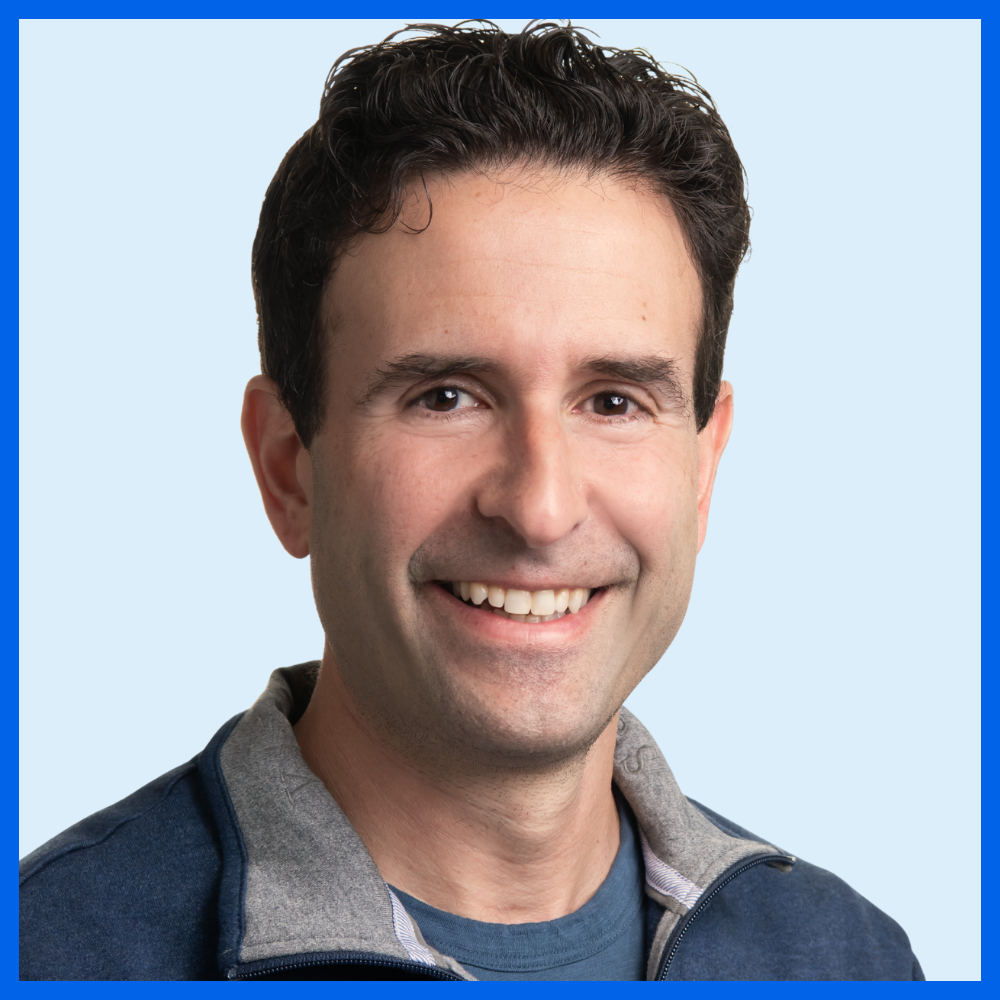
About Dr. michael rubin
Dr. Mike Rubin is a science-driven investor and Founder of Northpond Ventures. Trained as a physician and surgeon, he transitioned from clinical medicine into venture capital, where he focuses on translating scientific discovery into real-world impact through entrepreneurship.
Connect with him on LinkedIn.
Episode Outline
(00:00:41) Early Curiosity and a Passion for Science
(00:02:38) Creating a Bioelectrical Engineering Major
(00:03:46) Leaving Medicine at 32: A Defining Career Decision
(00:06:31) From Public Markets to Venture Capital
(00:10:16) The First Investment and Founding a Venture Firm
(00:12:21) Redefining Risk: The Fear of Not Trying
(00:14:03) Building in 2008: Opportunity in a Market Downturn
(00:15:37) Showing Up and Being Prepared: The Venture Capital Edge
(00:20:43) The Northpond Thesis: Science, Alignment, and Impact
(00:29:08) Amplifying the Signal Within and the Power of “I Don’t Know”
-
[00:00:00] Sharon Kedar: Welcome, Mike Rubin, my business partner, and my brother to the podcast. For those viewers and listeners that don't know, Mike is married to my identical twin sister. I'm gonna take you back to when you were a retinal surgeon at Harvard. I guess the year would be 2007. You have a baby at home. My sister is working really hard.
As a fellow. You're a fellow. When did you wake up and say, okay, I've done all this training, but I think I wanna be an investor. Like, can you just take us through sort of that giant leap and how old were you? How did it happen? Just sort of however you wanna share it.
[00:00:41] Dr. Michael Rubin: Absolutely. Sharon. There's a few things that I knew about myself at a fairly young age that were.
Pretty consistent throughout my life, even though they manifested themselves in different ways. One of those things I discovered at a very young age about myself was a passion for science, and that really was inva throughout all my life and all the different things that I did. Even though externally they looked different internally, they were really driven by a common thing, a sense of wonder, and a structured mechanism to address that wonder through science.
[00:01:13] Sharon Kedar: What does that mean?
[00:01:14] Dr. Michael Rubin: Yeah, I guess I'd have to go back and. Start with my parents. My father's a professor and a scientist, and my mom is an educator as well as an entrepreneur of sorts. That was the milieu, if you will, that I was brought into. And at a very young age, I was that kid who sat in the car who just continually asked why about everything.
And fortunately, I had. Parents, including a, a professorial father who helped me understand that curiosity through science, which really resonated at a very young age. And that's something I've always carried throughout my life. And I'd say the second thing that I always carried throughout my life was some notion of innovation and even entrepreneurship.
Uh, I. I didn't think about the concept of entrepreneurship at the age of five. It wasn't anything that really occurred to me discreetly, but as I looked throughout my entire life, I was always passionate about innovating in a way that was really coherent with my own personal values. So in college, I developed my own major, which got.
Instantiated in the course catalog.
[00:02:28] Sharon Kedar: You developed your own major, like what was your major? 'cause that's not a typical thing. Someone might be in college now listening to this, wondering how they can become Mike Rubin. So what was your major?
[00:02:38] Dr. Michael Rubin: My major that I graduated from and that I started with was electrical engineering.
But along the way I became interested in medicine and there really wasn't a major that blended electrical engineering as well as. Biology. There was a bioengineering major, there was a biomedical engineering major, but there was not a bioelectrical engineering major. And that was a distinction that mattered to me for a number of reasons.
And so I convinced the dean of students at the time, not only to allow me to major in that, but to actually formally create that as a major that others could then pursue to the future. So I was the. First of, I'm not quite sure how many who pursued that specific course of study at the undergraduate level.
[00:03:27] Sharon Kedar: So your love of science obviously carried through to becoming a retinal surgeon. But can I take you to the point when you're at Harvard, at the top of your game and you're basically saying, okay, I don't think this is my life's path. It's kind of a bold move. Did you know that you wanted to be an investor?
[00:03:46] Dr. Michael Rubin: Yeah. I was 32 years old at the time, and. What I recognized was a number of things, and it was more visceral than even intellectual. We have these preconceived notions of what things may be like, but we don't fully know until we immerse ourselves in them. And medicine was one of those things, and once I was in it for a decade, I had a better sense as to what it was, and then I can make a determination as to whether I wanted to commit to another decade or to pivot, and it was becoming clear to me that.
At, at best, I was trying to compensate and at worst I was trying to force myself to do something that I really wasn't meant to do and I felt that viscerally and then ultimately, intellectually. And it took a while for me to recognize that there are other things that I could do that were still consistent with who I was at my core, my passion for science, my passion for innovation.
But didn't necessarily mean that I was going to be a practicing physician and surgeon. And at that point in time, I didn't really know what that path might look like. I didn't tell myself it's investing. And even when I started investing and even when I started in venture capital, I didn't really understand what either of those things meant.
Uh, I was just. Really open to learning whether those things could be a good fit.
[00:05:12] Sharon Kedar: But to be like 32 years old at Harvard in a field that is really hard to get into and to suddenly sort of start over. It's pretty unusual.
[00:05:22] Dr. Michael Rubin: It is pretty unusual, and I was fortunate for a number of reasons. One, even though I was newly married and had a son who was about one years old, I had a wife who was incredibly.
Supportive of me in some ways, even more supportive of me than I was supportive of myself at the time. And she was complete, she was completely nonplus. She's, oh yeah, go do something else if you don't like it. I never saw you as a retina surgeon anyway. She actually authentically believed that I would do well.
I never sensed any consternation on her part that I would do something else and I wouldn't find my footing. And that was really. Just incredibly valuable, both in switching from medicine to finance and ultimately launching North Pond.
[00:06:13] Sharon Kedar: What's interesting about your story is it really is just such a credit to the partnership that you have with my sister when you decided that.
You were going to transition to investing, were you certain that you wanted to do stock equities or were you just sort of in creative explore mode?
[00:06:31] Dr. Michael Rubin: Yeah, I was largely in creative explore mode, although I had a pretty strong sense at the outset that I didn't want to do public equities over the long term, and the reason for that was deeply personal.
I. I really like being involved at the ground level in the development of the underlying science and the development of the underlying business to be an agent and a principal within the company itself, and whether the underlying business succeeded or failed. It didn't need to be the primary reason, but I did need to be a part of the story such that I felt like.
I had an impact, I had an influence. It's not an indictment of all of public equity. It's actually something I still very much enjoy. But for me, I found myself trying to sit on the outside evaluating a business, and sometimes we had the right evaluation and sometimes we had the wrong evaluation. But at the end of the day, I really couldn't attribute the success of the business in any meaningful way to any of the work that I did other than just to say that.
My model sort of conformed with what ultimately would happen. I always wanted to see it as a step zone to getting closer to the underlying business, to the underlying value proposition, to being engaged with the business, engaged with the science. And so venture capital was a much more natural fit for me.
But thanks to you, Sharon, and your introduction into Sands Capital. I just got a tremendous opportunity to be part of a phenomenal organization, and that was like a launching pad. Into what I ultimately wanted to do, which was get into the private markets, and I was fortunate to be able to do that quicker than I had thought.
[00:08:14] Sharon Kedar: Mike, you were so many firsts. It was a unique time. I had been at Sense Capital for a few years when you came, but. I recall there was a brief moment where we had this healthcare focus. I still say we having spent 15 years or you having spent 10, and I'd be remiss not to call out Frank Senior and Frank Junior, who just were so good to both of us.
We had a healthcare portfolio and I remember saying, this is the guy that you should talk to, and I blinked and you had A-C-F-A-A PhD become CEO of Sam's Ventures. To be clear. But I remember saying, I'm like. There's just something about him. Mike can do this, but when you joined, it was like this crazy trajectory that happened.
Can you tell us a little bit about when you joined and just the steps you took?
[00:09:04] Dr. Michael Rubin: First of all, thank you so much for your confidence in me. I hope I've reinforced that confidence over the years. I've done my best. Yeah, it was a lot of fun. Uh, it's a lot of fun to come to an amazing organization like Sands Capital with.
A totally orthogonal background where you can think about things and provide values in ways that other people weren't trained to do. And that really helped me develop really quickly in that organization because I wasn't interchangeable in my knowledge set or in my skillset or in my background. And I could bring different things.
And so what I try to do is. I developed the skill sets that you mentioned. I went through the formal process of getting my CFA charter and getting an MBA, less so for the nominal degrees, but more because I realized I needed to understand the basis of finance and investing, and it was really good, rigorous way to accrue those skills.
How
[00:10:05] Sharon Kedar: soon after you joined it felt like we blinked and suddenly we were in the private equity. I mean, it wasn't, obviously there was like a process, but like how fast was that?
[00:10:16] Dr. Michael Rubin: It is difficult to fully answer the question. Okay. One answer, which is not entirely unreasonable is the very first day I was supposed to start in January and my start date got pushed up so that I can attend the JP Morgan meeting.
The very first meeting I had at JP Morgan was with a very close friend of Frank Sands by the name of Ian Radcliffe. Who had just founded a startup and I learned about his startup on my very first day at Sands Capital before I did any work on the public markets, and that ultimately led to my very first investment.
I borrowed $5,000 from my mom and dad to contribute to that financing round.
[00:11:06] Sharon Kedar: Yeah, I think your parents, just knowing them and loving them, operate in. Opportunities, possibilities, innovation. Your dad's obviously a brilliant, brilliant scientist who has a book that came out recently. Your mom's a successful entrepreneur, probably.
You just thought you could like go to the moon. Was there anything growing up that you didn't think you could do it?
[00:11:29] Dr. Michael Rubin: We were really fortunate. Our parents modeled not just possibility, but also just tremendous coherence between how they live their lives.
[00:11:40] Sharon Kedar: Right,
[00:11:40] Dr. Michael Rubin: and what they deeply believed in. Like I look at my father and it was hard for me to think of him doing anything other than what he did.
He's so passionate about it and it's so coherent with everything that I've learned about him over my entire life. And my mom also lives from a place of tremendously deep coherence, so I never really thought about it. When it takes your whole life and you analyze it, you're like, oh, okay. I guess that's where I learned it.
[00:12:09] Sharon Kedar: You've created your own path. You don't have to be like your mom, be like your dad. Somewhere in there with this like, I'm gonna call it like radical authenticity. I guess what you're saying is like they both were just themselves.
[00:12:21] Dr. Michael Rubin: Yeah. And sometimes it's a reframing of risk in some ways. I think people either implicitly or explicitly think that risk is the notion that what if they try and fail?
And what if that failure is public and is
[00:12:36] Sharon Kedar: right
[00:12:36] Dr. Michael Rubin: broadly known or humiliating or embarrassing, and therefore people think not to take these quote unquote risks because of failure, where I've always, one thought failure was an inevitability. Yeah. In all of our lives. So there was no avoiding it. And therefore, to me, risk wasn't about.
The inevitability of failure. To me risk was always, what if there's something that I'm really passionate about that could be really fulfilling and I don't give myself the opportunity to do it, and I never find out.
[00:13:10] Sharon Kedar: The takeaway is sometimes people who are in their teens or twenties look and maybe see you and think, oh, it just sort of happened.
But what I hear is like, one, you made it happen, two. It's like this concept, you and I talk about a lot of non-linearity. It's being comfortable with that and then also letting yourself be uncomfortable. I know that's a concept that's really hard for people, but you let yourself be uncomfortable, make this leap into investing.
And then you jumped into the investing pool in January oh eight, which was a tough time. I remember thinking like, okay, when's this market gonna turn? But January eight until we got to March of oh nine, I mean, that was quite a challenging period, so. So I imagine that must have also taught you a lot about buy lows, sell high, and adding sort of the business toolbox to your toolkit.
[00:14:03] Dr. Michael Rubin: Yeah. It was really fortuitous in a way, because that was the environment which I started my career in venture capital, and I had never worked as a venture capitalist before. I. Helped found a venture capital firm. And what that meant was I needed to start in an environment where a lot of people were retreating so that there was an opportunity for someone to step in and gain access to great opportunities simply because everyone else wasn't lining up for them.
And I didn't intend it that way. It was fortunate, but I do think the best time in many ways to enter into a new discipline or to build something. Is when everyone else is retreating. 'cause it just opens the aperture for someone to look over the horizon and say, the whole concept of innovation isn't structurally unsound.
It's just simply that we're going through a divot the market. And I just figured that innovation and science and medicine and technology were secular long-term drivers. And if people treated it as if all these disciplines were gonna disappear overnight. I felt what better time for me to establish myself and that all worked out fairly well.
[00:15:16] Sharon Kedar: Another thing about you is you were traveling so much in the early days at Sands Capital and you were fundraising in every country I can imagine. Like you literally would've gone anywhere. So can you just talk a little bit about like that relentlessness, that might be like a cliche word for it, but what underlies that we will not fail approach.
[00:15:37] Dr. Michael Rubin: Part of it was. We founded a venture capital firm without ever having been in venture capital. We had no fund, we had no clients, we had no track record, we had no credibility to speak for. And at the same time, there were all these other well-established venture firms, whether they were Sequoia or Kleiner Perkins or NEA, who had longstanding track records and had big organizations with large funds and all these resources and.
The question that we continually got at Day Zero was, why would any of these startups work with you? Why would anyone work with you relative to all these other well-established people and organizations who have all these track records? And the only coherent answer that I could give at the outset was. I showed up, right?
I showed up in Namibia, right? Or South Africa or Botswana. I showed up.
[00:16:35] Sharon Kedar: Those were all places you showed up sincerely.
[00:16:38] Dr. Michael Rubin: Oh yeah. We actually had, we had clients, believe it or not. Yes. Who had never heard of venture capital, who ended up investing in us. And I'm proud to say that we did them right. But even beyond that, we showed up at the doorstep of even the founders of these businesses in Silicon Valley and Boston.
In a way that other people didn't. I figured showing up isn't something that you have to have expertise to do, or you have to have a track record to do, or you have to have a reputation to do. You just have to have the stamina. And then Sharon is you well known. What I learned was there's a few other things that we can do other than showing up that can give us an edge without having all of these great accolades that other people have.
Right? You can show up prepared. Joe, but
[00:17:22] Sharon Kedar: that's a big one. That's a big one. You're naturally passionate. You naturally show up, but the whole prepared thing, I mean, you naturally got it. I think we both grew up with that. I know Frank Sand Senior Team kind of raised us that way. I remember when we were starting North Pond, and I didn't have a science background, but I mean, I remember when we were interviewing people who weren't prepared on the science front, and it was like personally offensive to you.
So what is it? What? What is it about? Preparation that you naturally get that others don't.
[00:17:54] Dr. Michael Rubin: Probably didn't hurt to have two educators as parents and a father who was a professor who was constantly studying. But I guess what it was, in my entire career, I've only had one half promotion from a medical analyst to a research analyst, which doesn't sound like much, but everything else I had to create for myself.
As we established, even at my first day of Sands Capital, we pretty much started this venture business. I didn't have the benefit of sitting. On the bedrock of anything other than what I could bring to the table, which was really just showing up, being prepared, being passionate, and being personable, and I never lost the sense that those critical pieces would continue to be important even as we've established ourselves and now have more capital and more of a reputation.
Those critical pieces and everything that I've done have proven to be necessary. In order to sustain ourselves. And so I just haven't really seen people achieve sustainable success without showing up, without being prepared, without being passionate. And those were things that I committed myself to, to this organization.
And you and I wanted to create a culture of people who shared those values. Yeah. And I like to think that's what we built.
[00:19:13] Sharon Kedar: Yeah. But you also have always. Walk the walk and talk the talk and just sort of bend yourself. So it's like some of the hallmarks of who you are is like you will show up in whatever attire you'd like to that day, which I think is really cool, and maybe one day I will do that.
Two, you'll also show up in the most interesting, unusual ways. So one of the ways that everybody who knows Mike and knows us and knows North Pond is that. We have a lot of walking meetings, so that sort of par for the course. But I remember a few years ago we were doing a pitch meeting and we did succeed in doing the investment and winning the deal.
But you dialed in and you hadn't told me, but you were dialed in from a kayak. Do you remember that?
[00:20:04] Dr. Michael Rubin: Uh, I do. We were on vacation. It was during the COVID lockdown, so. There was a bit of an understanding that we're all out and about to some degree, but I happened to be on a kayak at the time that we were doing the call, and I figured why not multitask?
And I'm known a bit for my informality. I do commit myself to showing up, but I, I don't always promise to show up with a suit and tie.
[00:20:27] Sharon Kedar: That's what makes you. Relatable. Okay. So can you just share a little bit about, in your words, what is North Pond? Why was North Pond created and what are your hopes for what we do in the world?
Just some small questions.
[00:20:43] Dr. Michael Rubin: Yeah, absolutely. North Pond was built on the foundation of a belief that the furtherance of scientific innovation, instantiated within the context of an entrepreneurial vehicle, could profoundly transform humanity. Was the foundational principle, and we felt like there were mechanisms that we could deploy and we have deployed over the years to really advance that aim in a novel fashion.
Some of that relates to the coherence of our mission. Some of it relates to the formal relationships we have with top tier academic institutions like Harvard and MIT and Stanford. That allow us to work very intimately with some of the best scientists at those organizations, and we've really tried to build an ecosystem that goes beyond ourselves and beyond even the people who are formally at North Pond or even the people who are formally within our companies, and ask ourselves, if we look at the entire ecosystem as part of our team, how do we unlock synergies and unlock value?
That enables us to bring science to its. Full commercial fruition so that it can impact humanity. And you and I, Sharon, have always recognized that the business success and the financial success is really consonant with the success of the underlying business and the value proposition. If
[00:22:18] Sharon Kedar: yeah,
[00:22:18] Dr. Michael Rubin: an underlying biotherapeutic works and it gets FDA approved and it gets adopted by physicians 'cause it's doing well for its patient, guess what?
That's gonna be a great business outcome. We have always looked for alignment. Alignment has been such a critical word for you and me in so many facets of what we do, but our business model is aligned as well, where our economic success, our client's economic success, our underlying businesses, economic success, are all aligned and it's also all aligned with the underlying science.
So that was really the formative mindset that we had and the foundation that we built North Pond Pond.
[00:22:53] Sharon Kedar: What's so interesting hearing you talk is it reminds me. Of the fireside chat we had with Jim Collins, the author of Good To Great. It was early on in North Pond, and he talked about our sacred responsibility to science, and he also talked about.
The importance of the network for us to do our work. I remember he sort of ended with that and it was one of those Jim Collins things where you gotta think about it and think about it more. Can you talk a little bit about if someone would wanna get to know North Pond, how they might do that?
[00:23:27] Dr. Michael Rubin: Absolutely.
And we think of North Pond as an organization that has porous walls, so to speak, because we're not just simply contained within the finite number of people who happen to be. Fully employed here. We include all the thousands of people who work for the companies that we are deeply engaged with. It includes all the members of the academic institutions.
It includes our peers in the venture community. I think it may not be broadly understood for people, not in our industry, that virtually every single business that we're involved with is in conjunction with other venture capital firms. And we work very closely with those partners, and they mean a tremendous amount to us and we work collectively to.
Create positive outcomes. So they're part of our ecosystem. The ecosystem is really incredibly broad, and it includes anybody who's passionate about science and innovation and entrepreneurship and impact, and that ecosystem is conceptually. Yeah, all part of what we think of as the broader North Pond for people who wanna get engaged.
There's a number of great ways, just depending on where you are in your personal and career development, but at the level of our specific companies is the best place to start. Learn about those companies. Find ways to interact with and engage with those companies in a way that is personally, professionally, meaningful to you.
[00:24:49] Sharon Kedar: I love that answer. And so an output of our process is that we impact areas like infectious disease, immunology, neurology, oncology. I mean, there are these sort of big important areas like when the pandemic hit, we're like, oh yeah, like we've already got. A bunch of companies working on infectious disease.
Can you just talk a little bit about how we've gotten to this sort of set of diseases that we may impact? I mean, there's no guarantees, but it's kind of amazing to think about the broad set. So can you just sort of talk about how did we get to that?
[00:25:22] Dr. Michael Rubin: Yeah, a absolutely. Sharon, one of the beauties about science is it's challenging, but it's not structurally indiscernible.
And what I mean by that is the underlying mechanisms that we're studying, whether their normal biological mechanisms or pathology itself aren't arbitrary. Something is happening at the molecular cellular level. That is leading to the pathology, right? It's not as if a cell wakes up in the morning and decides whether they do or don't like the particular human that they're a part of and decide to do something onwards.
It's really a structural, molecular, biological phenomena that is driving the pathology. And in part because of that, one should surmise that there should be a structural solution that coincides with our deep understanding of what's going wrong at the scientific molecular, cellular level. What we try to do is ask ourselves, do we have a good understanding?
Of what is happening at the pathophysiological level for a particular disease process, whatever it may be, could be infectious, as you said, immunological, oncological, where we can discern the specific mutation, this specific defect, this specific metabolic process that's gone awry, where we can characterize that.
And then what we do is we ask ourselves in our armamentarium of tools and technologies and knowledge base. Do we have vehicles that can specifically address that underlying issue in a coherent, scientific manner, and we place primary importance on answering that type of question before we even necessarily ask ourselves what underlying disease we wanna address.
Because there may be an appetite to find something for. A specific type of cancer, a specific type of rare disease. But if there's a rare disease where we don't really understand the mutation or there's a tremendous complexity in the genetic underpinnings that make it very hard for us to address for one reason or another, we have to have the humility to say, we may not have the right approach for that yet, because these exercises are incredibly costly and they're incredibly risky, even when you do think you have a rational solution.
And so, you know the exercise that you and I take on together along with. Our whole organization and all of our partners is can we come up with a coherent thesis where we understand enough about the underlying pathophysiology, we understand enough about the solutions that we're developing, and we think in a reasonable amount of time with the rational amount of capital, we can come up with a solution that's viable enough to get other people to wanna join us in this exercise.
And I think in our portfolio is an output of that exercise. Once you get to 50 60 businesses, you have a pretty broad representation of all these different disciplines. But that sort of happens a resultant of this sort of underlying rigorous process.
[00:28:30] Sharon Kedar: You can have a platform and a disease area, and if there's another disease area that makes sense, we'll take it on.
But what I also hear you saying is if we can't take it on, we don't. I think what we do is really just crazy hard because it takes so much discipline. And it takes so much focus and it's not something where your brain truly ever turns off from it. But if you had to just like impart one piece of advice to somebody who's listening to this, who's not had any mentors in the industry, just curious if you had one thing that you would say to somebody who's looking like, oh, I wanna do that.
[00:29:08] Dr. Michael Rubin: The best piece of advice I think I could give people is. To try to amplify the signal that lives within you and try to turn down the volume on all the, the noise that exists outside of you. Because we're all bombarded with well intentioned voices that either explicitly or implicitly tell us what we should be or what we shouldn't be, or what the right way to live our lives are, or what we should aspire towards, but.
Deep within us, we have an authentic voice that has known all along who we are and what's important to us. And when you amplify that internal voice and when you trust in that voice, then you actually unleash this positive, virtuous. Flywheel cycle where you naturally find that you have the passion and the talent and the perseverance to do all the things that you need to do to succeed because it's not reinforcing something outside of you, it's reinforcing something inside of you, and it's really hard to sustain anything for very long when the rewards are totally external and the internal rewards seem vapid, but it's much easier.
To sustain something when it feels who you are and what you're about. And that's what I've always tried to do. And then what it's amounted to in the external world is really just an output, an outcome of who I feel like the best version of myself is.
[00:30:45] Sharon Kedar: I love that. I, I also think hearing you talk that there is.
Three words that we don't say enough. One of the things that causes a lot of innovation is when someone has like the courage to be like, I don't know. And so then if you have the right people around you, you start talking about, well, if you don't know or we don't know, like what does that mean? I don't know, is actually like an invitation to innovation.
[00:31:08] Dr. Michael Rubin: I love the way you formulated the criticality of the concept of, I don't know. And as someone who was born into a scientific family and. Who loves science. Everything that we do is predicated on the very concept of, I don't know, and it's so stringent and so formative in science that not only do you have to study something if you want publish it, which is critical in science that you don't know, but actually.
The standard is that no one should know. So if I don't know something but someone else knows it, I can't publish it because then you submit it to publication and someone says no. That's already known in the literature. The standard isn't just that you don't know, but it's not known. Right? And so science actually has a launching point of this very question of what don't we know yet?
And then how do we start from a point of not knowing and create. Some clarity amongst ourselves in a really collaborative fashion. So I think in many ways science is a great predicate to entrepreneurship and to the type of work that we do because it's inherently a discovery process and it's inherently an iterative process.
And I think that iterative discovery process is a lot about the work that we do here at North Bond.
[00:32:30] Sharon Kedar: I love it. Well, thank you Mike for being on. I learned a lot. I think your wife might learn a thing or two from the episode, but I mean, it's just such a pleasure to work with you. It's such a pleasure to just experience you and the possibilities that go through your head, and just a fun little tidbit to end.
Mike is always just as you see him, this is like exactly who he is. Authenticity's obviously a big thing. It's sort of a cliche word, but when we traveled internationally to India for work, I was watching a movie on the way home. And Mike relaxes by doing physics and math.
[00:33:06] Dr. Michael Rubin: That's kind of you, Sharon. I'm incredibly grateful for you and for your amazing podcast.
I'm just privileged to be a part of the extraordinary lineup that I know is ahead, and look forward to future episodes as a listener.
[00:33:19] Sharon Kedar: Thank you, Mike.
[00:33:20] Dr. Michael Rubin: Be well.
Additional Resources
Northpond Ventures: https://www.npv.vc/
Sands Capital: https://www.sandscapital.com/
Harvard University: https://www.harvard.edu/
MIT: https://www.mit.edu/
Stanford University: https://www.stanford.edu/
About Your Host
Sharon Kedar, CFA, is Co-Founder of Northpond Ventures. Northpond is a multi-billion-dollar science-driven venture capital firm with a portfolio of 60+ companies, along with key academic partnerships at Harvard’s Wyss Institute, MIT’s School of Engineering, and Stanford School of Medicine. Prior to Northpond, Sharon spent 15 years at Sands Capital, where she became their first Chief Financial Officer. Assets under management grew from $1.5 billion to $50 billion over her tenure, achieving more than 30x growth. Sharon is the co-author of two personal finance books for women. Sharon has an MBA from Harvard Business School, a B.A. in Economics from Rice University, and is a CFA charterholder. She lives in the Washington, DC area with her husband, Greg, and their three kids.
CONNECT WITH SHARON
Connect with Sharon on LinkedIn: Sharon Kedar
Follow with Sharon on Instagram: @sharonkedarcfa
Learn more about Innovate and Elevate innovateandelevatepodcast.com
Join the newsletter to receive the latest episodes in your inbox: Innovate and Elevate Newsletter
Rate, Review, & Follow on Apple Podcasts
Did you love this episode? Let us know by rating and reviewing the show on Apple Podcasts. It’s easy - click this link, scroll to the bottom of the page, and select “Write a Review.” Let us know what you liked best about the episode. While you’re at it, consider following Innovate and Elevate. Follow now!
This podcast is produced by Brave Moon Podcasts.
Please note: The content shared in this episode is for informational purposes only and does not constitute medical, financial, or investment advice. Please seek guidance from your own qualified professionals before making decisions.
FAQs
Can doctors transition from medicine into venture capital?
On Innovate & Elevate, Michael Rubin shares his own transition from physician training into venture capital. His career journey demonstrates that doctors can apply scientific thinking, problem-solving, and decision-making skills beyond clinical medicine and into entrepreneurship, investing, and healthcare innovation.
Why do physicians leave clinical medicine?
In Season 3 Episode 1 of Innovate & Elevate, Michael Rubin explains that leaving medicine is not always about walking away from purpose. Career changes can reflect curiosity, alignment, and a desire to create impact through new paths. The conversation explores how non-linear careers can still follow a coherent mission.
What is science-driven venture capital?
On Innovate & Elevate, Michael Rubin discusses science-driven venture capital as an investment approach focused on translating scientific discoveries into real-world impact. Through Northpond Ventures, the emphasis is on long-term thinking, scientific rigor, and supporting innovation in human health.
What can scientists and physicians bring to entrepreneurship?
On Innovate & Elevate, Michael Rubin explains that scientific training often develops critical thinking, intellectual humility, preparation, and comfort with uncertainty. These qualities can be valuable in entrepreneurship, investing, and innovation.
What does it mean to redefine risk?
In Season 3 Episode 1 of Innovate & Elevate, Michael Rubin reframes risk not as the fear of failure but as the fear of never discovering what might have been possible. The conversation challenges traditional ideas around career decisions and entrepreneurship.
Are non-linear career paths bad for long-term success?
On Innovate & Elevate, Michael Rubin explains that many careers in science, healthcare, and innovation rarely follow a straight line. Rather than focusing on perfect progression, he argues that coherence and long-term purpose matter more than linear advancement.
How does scientific thinking influence venture capital decision-making?
Drawing from his experience as a physician and investor, Michael Rubin explains on Innovate & Elevate that scientific thinking helps evaluate uncertainty, ask better questions, and make decisions when complete information does not exist.
Why is saying “I don’t know” important in science and innovation?
On Innovate & Elevate, Michael Rubin discusses why intellectual humility and saying “I don't know” can become the starting point for meaningful discovery. Acknowledging uncertainty often creates opportunities for learning, innovation, and better decision-making.
What role does preparation play in entrepreneurship and venture capital?
In Season 3 Episode 1 of Innovate & Elevate, Michael Rubin discusses why preparation and consistency often matter more than having a perfect playbook. Building in science and healthcare frequently requires showing up repeatedly and staying prepared for opportunities that may not yet exist.