
Shapeshifting Human Health: One Medical’s 30 Year Journey with Former CEO Amir Dan Rubin
about the episode
How Do You Build a Healthcare Company That Lasts? One Medical CEO Amir Dan Rubin on Innovation, Leadership & Human Health
n this episode of Innovate & Elevate, Sharon Kedar sits down with Amir Dan Rubin, former CEO of One Medical and former executive at Stanford Medicine, to explore the realities of building and scaling innovation in healthcare. From early telehealth ideas in the 1990s to leading One Medical through its multi-billion-dollar acquisition, Amir shares why meaningful change in human health often takes decades, not years.
Together they discuss systems thinking, leadership, entrepreneurship, healthcare innovation, and why some of the most transformative ideas are built long before the world is ready for them. If you're interested in the future of medicine, healthcare startups, or building organizations designed to endure, this conversation offers a powerful blueprint.
What You’ll Learn from this Episode:
Building in healthcare is a long game measured in decades, not quarters
The real risk is not failure, but never finding out what could have been
Systems thinking from outside industries can unlock innovation in healthcare
Frequently Asked Questions
What Is Systems Thinking in Healthcare?
Systems thinking in healthcare is the practice of improving outcomes by optimizing the entire experience, not just individual components. Instead of focusing only on clinical care, it considers operations, patient experience, workflows, and consistency across the system. This approach often draws from other industries such as manufacturing, hospitality, and retail to create more efficient, scalable, and human-centered healthcare models.
What Does It Take to Build a Healthcare Startup?
Building a healthcare startup requires more than a strong idea. It involves navigating regulation, aligning incentives, scaling operations, and maintaining long-term conviction.
As this episode highlights, success in healthcare often depends on:
Time horizons measured in decades
Cross-industry thinking and innovation
Operational excellence and consistency
The ability to persist through uncertainty
How long does it take to build a successful healthcare company?
Building a meaningful healthcare company can take decades. As discussed in this episode, the journey from early concept to large-scale impact often spans 20 to 30 years or more.
What made One Medical successful?
One Medical succeeded by combining strong operational systems, a focus on patient experience, and long-term strategic thinking. It applied lessons from outside industries to improve healthcare delivery.
Why is healthcare innovation so slow?
Healthcare innovation is complex due to regulation, infrastructure, and the need for trust and safety. This makes timelines longer, but also increases the importance of durability and long-term thinking.
What is the biggest mistake founders make in healthcare?
One of the biggest mistakes is expecting rapid results. Healthcare requires patience, resilience, and a willingness to build without immediate validation.
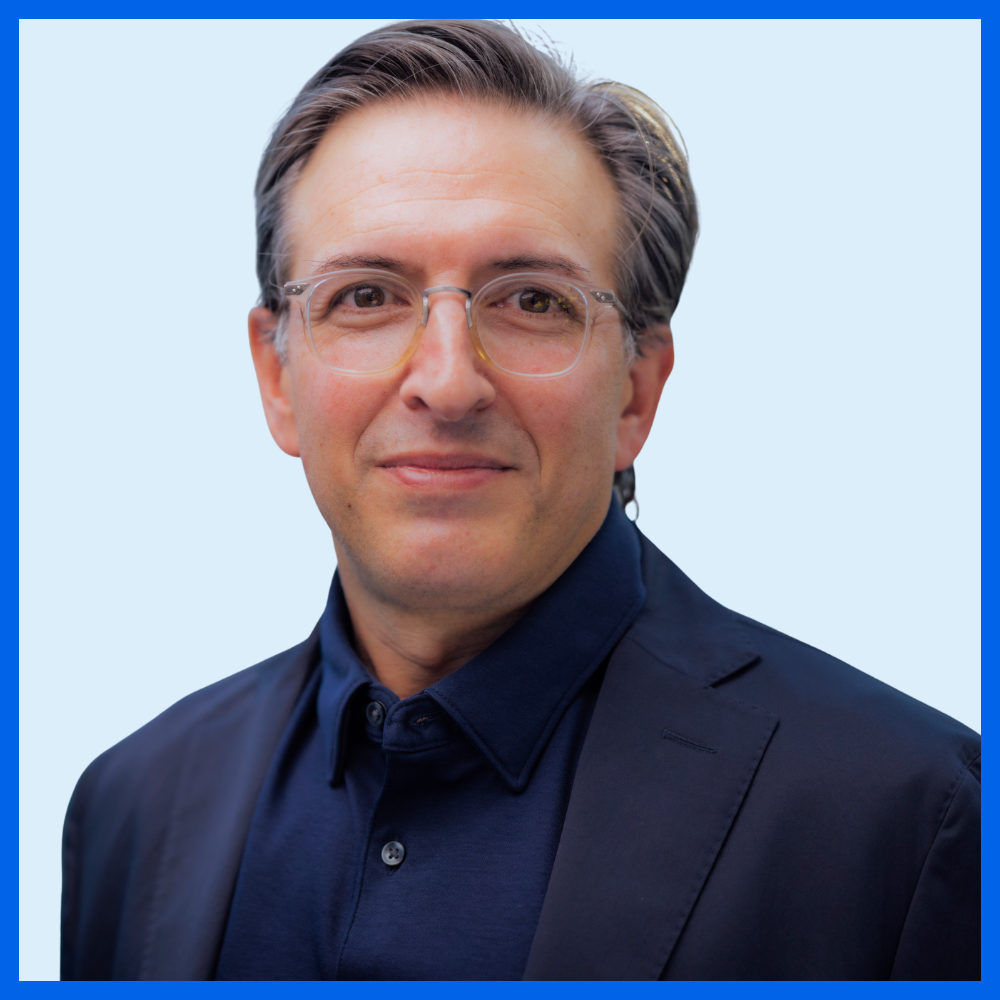
About amir dan rubin
Amir Dan Rubin is a healthcare executive and entrepreneur known for building and scaling innovative care delivery models. He is the former CEO of One Medical, where he led the company through rapid growth, its IPO, and its $3.9 billion acquisition by Amazon. Prior to that, he served as CEO of Stanford Health Care and held leadership roles at UCLA Health, Optum, and Stony Brook University Health System. Across his career, Amir has focused on improving access, experience, and outcomes in healthcare by applying systems thinking and technology. He is currently the founder and managing partner of Healthier Capital.
Connect with him on LinkedIn and Healthier Capital.
Episode Outline
(00:00) What this episode reveals about building in healthcare
(02:45) Early ideas around telehealth in the 1990s
(05:57) Why timing and market readiness matter
(07:26) Long-term thinking in healthcare innovation
(10:48) Building before the outcome is clear
(15:30) Lessons from industries outside healthcare
(20:10) Systems thinking and operational excellence
(25:45) Scaling One Medical
(30:00) The real challenges of building in healthcare
(34:00) What it really takes to win in human health
-
Amir Dan Rubin: I always was interested in running a company, starting companies, engaging in business and management. I would write my full name out, I would say my initials ADR, Incorporated, even as a young kid.
I had that enthusiasm for making an impact through business and management and innovation from my youth. And I think that was inspired by seeing that in my parents and family, but also just seeing what was happening. Certainly first growing up in Los Angeles and then being in Silicon Valley and just taking that all in.
Sharon: Amir Dan Rubin was CEO of Stanford Medicine, and if that was not enough, he was CEO of One Medical. He was responsible for taking it public and for selling it to Amazon. And now runs his own venture capital firm called Healthier Capital.
Amir, welcome to the podcast.
Amir Dan Rubin: Sharon, what a pleasure to be with you. Thanks for having me and excited to be here.
Sharon: When you came to Northpond to visit us when we first launched, do you remember what you asked?
Amir Dan Rubin: How good your snack game is. Was that my request?
Sharon: It was, so you're signed up with One Medical, right?
Amir Dan Rubin: Oh yes, that is true. Always be closing. You were a brand new startup, but I'm like we gotta have you. That's true. And then I asked about the snacks.
Sharon: We have really good snacks. Amir, I wanted to share with the audience your amazing journey. This is called Human Health Innovators this season, and I'm not trying to embarrass you in this way, but like ever since I've known you, you've just been in go mode.
And I remember reading the Stanford Graduate School of Business case about you and how, when you were at Stanford Medicine, you improved outcomes but decreased cost over five years.
So can we just back way up and what did you wanna be when you were a kid? What was going through your head just all the way back.
Amir Dan Rubin: All the way back. Wow. My brother Mike and I share the same parents and I think they came with an entrepreneurial spirit and really the spirit of the American dream, which is to make an impact and make a difference. And certainly saw that in our parents.
We had that imbued in us from our youth. Then in college I needed an elective my junior year. And the thing that fit into my schedule, I was studying economics and business, was this class called Health Economics.
And I loved it. And that exposed me to the problems and challenges that we have in the healthcare ecosystem. But also clearly the importance that healthcare is to all of us and to society. That really started me on my journey. But I think it was that combination of learning from our family, from our household.
That and really being motivated by the inspiration there and by the inspiration of the American Dream.
Sharon: It sounds like the health economics course really catalyzed your interest, but was there anything from like, when you were a kid?
Amir Dan Rubin: I always was interested in running a company, starting companies, engaging in business and management. I would write my full name out, I would say my initials ADR, Incorporated, even as a young kid.
I had that enthusiasm for making an impact through business and management and innovation from my youth. And I think that was inspired by seeing that in my parents and family, but also just seeing what was happening. Certainly first growing up in Los Angeles and then being in Silicon Valley and just taking that all in.
I'm like, wow, you could really make difference. And certainly during my youth, we saw the rise of digital technologies. Now we're seeing the rise of AI. It's hard not to get excited about how can we make things better by leveraging amazing new technologies, new business models.
Did ADR, Incorporated have any businesses like before age 18, or was it just like this idea in your head?
When I was growing up, it was the beginning of the personal computer. And so we were writing code and we were always thinking about like different online businesses, my friends and I.
We were playing around with these things when they were coming about. And certainly we were also in the beginning of the video game era. First Pong, then Atari, then arcades. And this was just blowing our mind like this was incredible. So yes we would always have these onesie, twosie, little business ideas.
Sharon: I'm well familiar with the sort of tech history that you're talking about.
I gotta think that inspired you and it's really interesting that you think about you growing up in California and going to UC Berkeley and having all those threads about technology.
And then really, like, one of the things I just think is so amazing and we'll ladder up to it, but it's like, for me, I'm a super user of One Medical. Urgent video chat. Hello? How do people not get excited? I might be a little too nerdy about it, but it's like just changing the whole way we look at things. That's like the Jetsons meets medicine.
Amir Dan Rubin: And it's funny, going back to my earlier years, I did an MBA and a Master's in Healthcare Management in the School of Public Health at the University of Michigan.
Sharon: Go blue. Yes.
Amir Dan Rubin: Go blue. My application was all about this concept of something that was beginning to be called telemedicine.
So this was back almost 30 years ago.
Sharon: Wait what year was it? Just to frame up...
Amir Dan Rubin: 1993.
Sharon: So cool, so ahead.
Amir Dan Rubin: I had worked in a startup actually with my dad building software. We modeled one of the earliest PACS (Picture Archiving and Communication Systems) digital radiology networks, and I was like, I'd like to combine this and how can this impact in healthcare?
And I had been exposed to healthcare management. And so that was actually my essay for grad school was this concept of, maybe in the future, we can do this. And at the time, we were maybe capped at 10 megabit per second ethernet. Starting to have compression technologies for video, but today have this synchronous session like we're having at this kind of resolution.
I think people suspected and knew it would happen. Later on in my career, it is pretty interesting 'cause at Stanford Health Care, we were the first to do video visits on the big electronic health record Epic. This is going back 17 - 18 years ago.
I'll show you something funny here. This was before Zoom. And the CEO of Epic, Judy Faulkner calls me. We were an early adopter. And then the next year I got invited to give a keynote at the Epic User Conference, and they gave me this award, the Golden Telephone Award for advanced use of telehealth.
Like I said, I'm going back here.
Sharon: Wait. That is brilliant. My favorite part of that is the telephone.
Amir Dan Rubin: I'm not sure that award was ever conferred again. That was maybe a one and done. But telehealth and reducing the friction and access to care has been something I've been passionate about. And also, how do you deliver a great experience? That's been something that I've focused in my career at UCLA, an amazing medical center where I was the chief operating officer.
We were in the kind of bottom quartile or decile in likelihood to recommend and customer service scores. And we took it to the 99th percentile in the nation. We had a nice book written on us. This author, Joseph Michelli, wrote a book on Starbucks and Ritz Carlton and Zappos, and he wrote a book, Prescription for Excellence on UCLA.
Sharon: I wanna ask you before we get to that. One of the aims for this season is someone who wanted to start a company. One of the goals is, I really want folks... 'cause if they see you now, it's okay, that guy has done all this stuff, but the journey is messy.
It's like an invitation for the younger generation to understand that. So if I could just ask you a question about something you said. So when you wrote about telehealth or telemedicine in 1993, that was 30 years before you sold One Medical to Amazon for $3.9 billion. So can you just unpack a little bit of what the reaction was? I just can't imagine everybody was like, oh yeah, like that's definitely gonna happen.
Amir Dan Rubin: Yeah, good question. I think innovation builds on inventions over time. If we go way back, right? If we think of waves of innovation cycles, we could think about in the late 1700s, 1800s, you had water power, right?
And so cities were built around rivers. And then we had steam and rails, so now we could distribute. And then we had electricity and we had the combustion engine. And then we went into electronics and aviation and then the internet and digital and now AI, plus or minus. But these are some big innovation waves that built on inventions that some of which have took a lot of time. We are talking about AI today, but there's a long history here, right?
And these things are building on each other. I think in the same way here, we knew there's problems. We know there's problems in the healthcare marketplace in the ecosystem. There's problems on access. There's problems on experience. There's problems on cost and on the demand side, and there's problems on the supply side, right?
And burnout and workflow and coordination. A lot of this is looking at innovation and inventions and saying, how can we apply this in healthcare?
Sharon: But like when you wrote about it in 1993, was everyone like, oh yeah, this is definitely gonna happen. Or what was the sort of tone of things?
Amir Dan Rubin: They accepted me into the program, so it was good enough to get in. But I think there's early crumbs of these things and as we're seeing today, and what would it take to get this to work, and how plausible is it to get it to work? I didn't know yet about the iPhone and mobile. This was really the beginning of the internet era in a big way and the web browser.
But one was starting to see what this could be, right? What these inventions and innovations were and how one might apply them in kind of all aspects of life and business. And certainly now thinking about how to apply it in healthcare now, meaning the last decades.
Sharon: You really believed it.
Amir Dan Rubin: Not only believed it, like that's what I wanted to do. It was 17 - 18 years ago that panned out doing it first, at least on Epic and probably also on Cerner, like at Stanford and we built the first I think mobile app. We were the first app on Apple Health Kit.
We had a virtual clinic with Cisco using, at the time Cisco telepresence units. This was always a passion and a vision. And also landing in Stanford with the amazing people and ecosystem and sitting here in Silicon Valley, it was also the right place to be able to pull it off. Because there is a lot of talent here involved in these arenas.
Sharon: One of the threads I hear from you is... and Mike's the same way, like neither of you have ever shied away from really big goals. Most people don't think like you guys.
Amir Dan Rubin: To me that's a big part of, maybe a little bit coming from family.
And also just embracing the amazing opportunities and the American Dream and then the amazing opportunities that come with innovation and new technology. And also frankly, being naive enough to think you can do it.
Sharon: I think also having the good fortune to be in the ecosystems that we were, where there was innovation happening in these really exciting companies. And just soaking that in. It was incredibly inspirational.
Wait, Amir, so how did you get, for instance, like UCLA, you were the COO. Would love to spend a few minutes unpacking that. How did you get to that opportunity and did you create it yourself? How did you end up being like COO at UCLA and then we get to CEO at Stanford? But I mean that's a remarkably huge responsibility for the age that you were.
Amir Dan Rubin: Thank you. They wanted somebody taller, smarter, and better looking probably, but that person was busy,
Sharon: Nice.
Amir Dan Rubin: I had been working in healthcare systems after graduate school. I worked as a management consultant and then I worked at Memorial Hermann in Houston after being a consultant in San Francisco and then became the COO at Stony Brook university health system in Long Island, New York. I think at the time I was probably the youngest COO of an academic medical center.
Sharon: How old were you?
Amir Dan Rubin: Probably around 32. And frankly, my amazing wife Nicole, who's also worked in healthcare management and nonprofit work, we were open to moving around, we were open to the experience. We didn't have the good fortune of having big extended family and certainly not in the United States. So you just went and you just go and you just try stuff. And so after that, then I got recruited to be the COO at UCLA's health system.
And that was coming back to where I grew up, which was great.
Sharon: You basically took it from a tough spot to a pretty amazing spot. Can you just share a little bit about how you did it and what happened there? It's a pretty cool story.
Amir Dan Rubin: UCLA is an amazing university and healthcare system and incredible talent: faculty, staff, nurses, university leadership. And really what I've tried to do throughout my career is align purpose with people and performance and often I found there can be drop-offs between purpose or mission, and how one aligns with the people and team, and then execution. How do you execute? And so we reengaged on our vision at UCLA of healing humankind. And at Stanford we realigned on a new vision statement, completely different, which was called healing humanity.
Completely different. Healing humanity through science and compassion, one patient at a time. Aligning these multiple missions that's big enough to align research, but also with the teaching mission and the patient care mission. And then in each of those, we needed to align that with the people.
How do we advance in that? Who are the people we have? And then the process. How do you do this systematically each and every day? Always. So you can deliver 99th percentile scores that you can deliver high quality, high safety. So then spent a lot of work on process improvement using lean process improvement techniques and design thinking techniques.
And also why we were going early into technology being innovative early, I would say at least in some of the health systems we talked about digital health and others. If we wanna deliver better access, better service, higher quality, lower cost, greater research, you have to lay that out and have some strategies and plans.
And we had an amazing group and team at UCLA and were able to push the ball forward. This is a long objective at every healthcare organization. But it was a real privilege to work with the incredible people there.
Sharon: You brought lean, like the Japanese Toyota approach to medicine UCLA.
Amir Dan Rubin: Yes, and I've used that throughout my career. Used it before, used it at UCLA, at Stanford, at Optum, at One Medical and also even my venture firm, Healthier Capital. We have processes, we have metrics, we have goals, we have customer service standards, and people are like, you guys aren't that big. But I've always said, if you wanna do something consistently at scale, you can't just wing it.
You have to have consistent approaches and processes.
Sharon: It's just fascinating to think that you took, what was applied to cars, and applied it in medicine 'cause it's not an intuitive thing to marry up. When you think about money and medicine, doctors are "patient first". So I imagine that was hard to implement, especially because you kept the care standard and the sort of "patient first" mentality as well.
Amir Dan Rubin: Yeah, it was exciting times then. Jeff Liker, who wrote The Toyota Way, a well-known book on Toyota. Jeff was actually a professor at the University of Michigan, and I had become COO at UCLA, and I saw he was putting on a workshop. And I had just gotten there and I had taken our chief nursing officer, myself and a couple others, and we spent a few days and we saw there were other healthcare organizations starting to do this.
And then we started engaging our physicians, our teams. If you think about the operating room, right? There's tons of process. Is it frustrating if the supplies aren't there? If the stent's not there, if the implant's not there, if the circulating nurse is going in and out. If the scrub nurse doesn't have what is needed... actually there's a ton of process, but you start looking at it, it's widely variable.
Does the case start on time? Why is there such a long wait time for MRI or CT scan, or how do we discharge a patient in a more timely fashion? So as we started engaging our medical and clinical leadership, I found they were amazing and interested.
And same with, how long does it take to turn over a room? How do you know? How do you measure it? How long is a patient waiting in the emergency department to get admitted? And it's cruel and suffering to make them wait.
Sharon: Hearing you talk, the baseline inherently was inefficient and didn't think about what you're talking about. Did the process enhancement across the system, were people like thank you, or was there pushback, or is it both?
Amir Dan Rubin: I think like any process of process improvement or change, one wants to engage people on a journey and it's not an end point, right? So I think a lot of this was about changing the way, or evolving, it's not that these were all brand new ideas. There's aspects of these and certainly in my prior organizations and in all organizations. But how do we do these things systematically, not just as a one-off?
So we started taking leaders and doctors and nurses through training programs. We would have rapid cycle improvement process workshops. We would have report outs. We use these techniques in our CICARE or patient experience approach, where every week we would go and make rounds in the units, in billing, in the parking lot.
And we'd have our medical leaders, we'd have our nursing leaders, our administrative leaders. We'd do it on night shifts, we'd do it on weekends. The Japanese word for going to see where the work is done, going to the gemba, going to the factory floor. Still do these things to this day. They're process improvement approaches, but also kind of cultural evolutionary approaches. This is how we get from Monday to Tuesday around here. We talk to patients, we look at process, we make continuous improvement. We measure. We recognize we're not where we wanna be, but how do we get to the next place? We, of course we celebrate and recognize our amazing colleagues and team members.
This is a little bit what I mean by aligning the purpose, the people, but then the process and ultimately the way we do things, not just as a one-off improvement, but this is the way work is done around here. This is how I get from Monday to Tuesday.
Sharon: I think the part that you make sound easy that is not easy is, ideas are super. However, actually like consistently executing and developing the process, like to do that in medicine is not easy. I think when people play from that book, The Big Leap, to their zone of genius versus their zone of excellence, it just comes naturally.
So you make it sound easy, but it is actually something that's like incredibly hard to do, but it just must be that you are able to take processes and have them adopted. Do you agree that it's like not an easy thing to do?
Amir Dan Rubin: I don't think it's necessarily complicated to understand because a lot of what I'm describing here are techniques that I've learned and read about from elsewhere, right? It's back on invention versus innovation. Somebody thought of the idea, but then you have to do it and apply it and execute it.
And in venture, build a business model around it, or as an entrepreneur. And then be able to do it at scale consistently. So I think it's that aspect that also I believe I got better at, or learned with repetitions, as well. But also being a student of other organizations.
Like for example, we took doctors, nurses to see bakeries. We took them to see a big auto manufacturing in Utah that was doing airbags that can compete with offshore manufacturing plants at same cost and higher quality levels. And learn from these different models like, wow, how did you do it?
What did you do? And you saw, wow, talk about alignment and here's how it is and here's how they onboarded and here's how they trained. Here's how they did their change of shift. Here's how they manage the one-offs. And you start learning like, gosh, if I want a highly efficient process, maybe I should have a separate process for the more complex cases.
Maybe I should staff that differently. Maybe I should take that off the main production line. Or how can I turn that line over? And you could think about the same things in healthcare and...
Sharon: Wait, what did people learn from the bakery?
Amir Dan Rubin: Similar things. This was a bakery that was also supporting one of the largest fast food chain in a certain region. And so you had to have consistency. You had to be able to deliver on time. They had a lot of just in time delivery. You had to have high quality standards. And so very similar things.
It was, team members, how are they onboarded? How do they train? What's the standard work? How do we do this? Specifically, how do you coach? If there's a problem, how do you stop the line, pull the end on cord before you get too far and that defect gets carried through the system?
Sharon: I literally am like picturing the analogies from like a bakery to the operating room (OR). It has to be quality, it has to be on time, it has to be fresh, it has to be good, obviously the consequences are really different for a bakery.
And I love bakeries. But just even the mindset. It's an out of the box idea. I can only imagine what they were thinking.
Amir Dan Rubin: They were good samples, so like worst comes to worst, you get a tasty fluffy dessert at the end of this.
Sharon: What I hear you saying is you took like lessons from all kinds of industries, whether it was like airbags to bakeries and you just took the best of lean. Did you put in place like incentive structures to get it done or?
Amir Dan Rubin: While there were some, I would say, as somebody who studied economics, the incentives weren't necessarily economic incentives or compensation incentives. Often it starts with we're aligned on a mission and vision. And do we wanna accomplish that? How do we inspire people for that change?
How do we engage them? How do we work on process? How do we have metrics around this? How does it ultimately end up feeling if you're not on board here, you're feeling like an outsider. And yeah, we could have some compensation systems, but I would say those were really not the major driver.
Sharon: Yes, because you can't make change without changing the culture.
Amir Dan Rubin: That's right. And what I found is, we have amazing people in healthcare and technology and they wanna make a difference. They wanted to work. People wanna take pride in what they're doing. They wanna be part of a winning team. They obviously are there to help heal humanity. And they wanted to perform well, and by the way, they wanna go through their day-to-day work. There's a reciprocity here.
It's like stuff works better and you can focus on the high value, high quality things that you wanna do, the teaching, research, patient care, rather than delays, weights, rework. So I would say those were the big incentives. But we did some pretty novel things. We did a lot, as I said, in patient experience.
We were amongst the very first to put the actual per physician satisfaction scores on the web at Stanford. Maybe the first couple ever, maybe still.
Sharon: So you're saying like, if I was going to Stanford Medicine, I'd be able to look and see how a doctor or a medical practitioner ranked in terms of what other patients thought.
Amir Dan Rubin: Correct. And yeah, we did this 15, 16, 17 years ago. This was just starting to be online. I like this shirt. It feels good. And we're like, we should do that.
There's issues to work out and how do you do this appropriately? But our patient experience approach that I've used throughout my career called CICARE, we would measure scores, but not just at a high level, but also we would observe individuals. How did this doctor, nurse, administrator, do this? CICARE as an acronym. How did we connect, introduce, communicate, ask, respond, and exit? We would give feedback. We would have coaching on it. Which is not easy always to get that kind of feedback, but it was all in a continuous improvement mindset.
Sharon: I'm sure there were like some upset people who, if they didn't have like perfect bedside manner or something like that, I'm sure you probably had some really smart, respected, super credentialed folks who are like, what are you doing?
Especially because you obviously have to think about like retention and stuff like that.
Like you would've had a big problem if suddenly they were like, who's this guy? I am leaving? But that obviously didn't happen.
Amir Dan Rubin: No. And again, I think part of it, starting with that mission is we have unbelievable people in these organizations with incredible backgrounds. And so part of it is how do we leverage their talents and let them do the amazing things that they wanna do? And part of that is building systems and processes and approaches that remove the waste and allow 'em to focus on the high value things that they're doing. And in healthcare that to go from point A to point B, I like to say, is a 97 step jagged processes. It's not always as linear as I might describe it here. But we had early champions, early department chairs who were champions. We had examples. You start propagating that in awards and recognitions and management meetings and newsletters and online, and it starts building. And then people hear it in the community. We were always known for amazing medical care and research and education. But now people are like, oh, that's the highest service place you can go.
Sharon: That's what's so cool and it's unbelievable. Can you just take us into what led you to transition your own career to an organization that really, I don't think anyone had heard of in 2017? I shouldn't say anyone, but can you talk about like how big was One Medical, why did you take it? And just take us on that journey. Because I think when someone hears that you were the CEO of One Medical and took it through IPO, sold it to Amazon, we think about this large established organization.
But what was it like in 2017?
Amir Dan Rubin: I'll go back to my time at Stanford. So we were kinda the first to build the video visits we had built the first app. We built our own app. I don't know if Epic had my chart yet, but we built our own. Stanford still has one. We built an engineering team, which is still extremely rare in a health system.
And we also built a salary modeled primary care group. And then we also had done a Medicare Advantage plan, believe it or not, in the middle of an academic medical center. So this is 17 - 19 years ago. I then got introduced during my time at Stanford, through another venture capitalist, to the founder of One Medical, Tom Lee, and set up a little investment arm at Stanford.
We also, by the way, created a company, Evidation Health out of Stanford there. I was trying to do evidence and validation of digital health. We ended pitching the Jeff Immelt, the CEO of GE at the time, and we did that jointly. And that company's doing well as a private company, in real world evidence. Had built the salary modeled medical group with digital health at Stanford. Had then met Tom and we actually invested in One Medical.
Sharon: Nice.
Amir Dan Rubin: I don't know if it was pre-seed or seed. Between my time at Stanford and One Medical, I was an executive vice president at Optum, but it had aligned with what I was trying to do at Stanford with the team, but ultimately we're a big academic, tertiary medical center.
And after my time at Optum, I had reconnected with Tom and some of the board members and he was ready to move on and I was like, this would be great. So they had an amazing culture and amazing DNA
Sharon: How big was it?
Amir Dan Rubin: Trying to remember. Maybe 20, 30 million in revenue. When we IPOd, I think we were at $1 billion in revenue.
And I think we were in a handful of markets, and I think now we're probably like 45 markets and hundreds of locations and digital health. And we had a few people, maybe a couple handful on the tech team. It's not about headcount, but we had hundreds later on, so we really built it out.
Then similarly, how do you do this at scale? How do you build a tech at scaled? How do you build operations?
Sharon: Wait, but Amir, that was also massive hypergrowth. If I caught your numbers, you were saying like 2017, $20-30 million of revenue and when you IPOd three years later, a billion. That's like insane.
Amir Dan Rubin: It was hair on fire.
Sharon: Fun. I love hypergrowth.
Amir Dan Rubin: Yeah, it was very fun and crazy. We had COVID in the middle there. That was a tough time indeed. But yes, we grew a lot. Initially focused on B2C, having these direct to consumer memberships, and then we really grew B2B starting enterprise clients.
We built partnerships with health systems. We built integrations into the EMRs.
Sharon: We also did a lot on the ops.
Amir Dan Rubin: So to be able to go from handfuls of clinics to hundreds and to have thousands of people, you needed to have that built out. We couldn't have done that. People used to say, we're scrappy, and I'm like, scrappy sounds sloppy at scale, right? You can't be scrappy at scale. So a lot to do there. We certainly had to build the tech, managing people in different states and licenses and asynchronous and synchronous care.
Health system partnerships was certainly important as well, in terms of managed care contracting strategy, in terms of being able to coordinate care across primary and specialty care, which increases the value to the patient.
Sharon: This idea of being able to access quality, consistent medical care in the format that you shared it, it was pretty innovative and I still think there's folks who have no idea, or like the first time they urgent video chat, they're like, what was that?
Amir Dan Rubin: It's not a small bridge. And we had, from the founding through the incredible team and medical leaders and also with the incredible partnership with Amazon. Ultimately, yes, we have all this amazing technology at One Medical, but it's really about can I deliver you to you a great experience when you need it the way you want it?
And if I can, I still have to make you aware of it. I still have to distribute it, sell it, which is non-trivial, right? The go-to-market, whether it's B2C or B2B, or even when we sold an employer, doesn't mean the employee at the employer knew about it.
And those are things in in the go-to-market that you learn like how do we do that better? How do we get more signups? There's the enterprise sale, but then there's the activation. You signed up or downloaded the app, but then there's the engagement and you use it.
And so then over time we develop strategies at each of these levels. And I think taking these learnings forward. If you think about digital health, but probably also physical health or other models, right? It's you need to think at each of these levels.
Sharon: I remember when I asked you about having, something that, like a sinus infection and this idea that you all had these algorithm, systems, processes, it's the common thread, but this idea that one did not necessarily need to go into the office to be seen, to even be given something like antibiotics.
When I first heard that, you almost don't believe it because it's so used to just having to go in, talk to the doctor that changing a mindset is...
Amir Dan Rubin: I agree. I actually even say myself. I get my care, my family all gets their care from One Medical. I'm like, I don't know how I'd access care otherwise. I wouldn't even know how to do it. I'd need blood work. I'd just go, I'd get it done. I'd do virtual care.
And now combining that with pharmacy and Sub-Same Day delivery, it's incredible, right? And I give credit to all these amazing people and the great team members and clinicians and administrative staff who are like, let's give people what they want. What's so wrong about that? Of course, we have to do it in an appropriate way, in a compliant way, in a medically appropriate way. But let's meet people where they are. Let's give 'em what they want. Sometimes our people will say they should do it this way, or they should come in. I'm like, but what if they don't? Is the option zero?
Sharon: And did the pandemic catalyze? Did it do anything to actually, in terms of some of the rules for One Medical, was it at all helpful?
Amir Dan Rubin: We had already been doing virtual care synchronously and asynchronously, so wasn't that so much. I think what did spur things is it opened society's eyes to, gee, we could do some of these things virtually. And then also they realized, oh, you need testing, you need vaccines. We could do that too with in-person care. So we were digital, but plus in person. And at another level there's a lot of headwinds when you have to shut everything and, dealing with a pandemic and those things. But we were well positioned.
We already had laboratories. We already had virtual care. We had synchronous and asynchronous. We had multi-markets.
And we had amazing team members who were willing to be out there in the front lines to serve their communities.
Really going back to the mission at One Medical was transforming healthcare for all, and the people believed it and they joined it. And we say through a human centered and technology powered model.
Challenging, not a no brainer but incredible people working with technology and in a process and system that aligns with it. Incredible people without the other two can end up in burnout and frustration, right? But incredible people with systems. And again, we are far from perfect, a lot of areas for improvement. But really proud of the team there.
Sharon: Amazing. Well, Amir, it is such a pleasure just to know you all these years and we can't wait to see what else you do and just thank you for sharing your story.
Amir Dan Rubin: Thank you so much. Great to be with you.
Additional Resources
One Medical: https://www.onemedical.com/
Amazon Deal with One Medical: https://www.reuters.com/markets/deals/amazon-buy-one-medical-35-billion-deal-2022-07-21/
The Big Leap by Gay Hendricks: https://www.harpercollins.com/products/the-big-leap-gay-hendricks
The Toyota Way by Jeffrey K. Liker: https://www.mheducation.com/highered/mhp/product/toyota-way-second-edition-14-management-principles-world-s-greatest-manufacturer.html
Stanford Medicine: https://med.stanford.edu/
UCLA Health: https://www.uclahealth.org/
About Your Host
Sharon Kedar, CFA, is Co-Founder of Northpond Ventures. Northpond is a multi-billion-dollar science-driven venture capital firm with a portfolio of 60+ companies, along with key academic partnerships at Harvard’s Wyss Institute, MIT’s School of Engineering, and Stanford School of Medicine. Prior to Northpond, Sharon spent 15 years at Sands Capital, where she became their first Chief Financial Officer. Assets under management grew from $1.5 billion to $50 billion over her tenure, achieving more than 30x growth. Sharon is the co-author of two personal finance books for women. Sharon has an MBA from Harvard Business School, a B.A. in Economics from Rice University, and is a CFA charterholder. She lives in the Washington, DC area with her husband, Greg, and their three kids.
CONNECT WITH SHARON
Connect with Sharon on LinkedIn: Sharon Kedar
Follow with Sharon on Instagram: @sharonkedarcfa
Learn more about Innovate and Elevate innovateandelevatepodcast.com
Join the newsletter to receive the latest episodes in your inbox: Innovate and Elevate Newsletter
Rate, Review, & Follow on Apple Podcasts
Did you love this episode? Let us know by rating and reviewing the show on Apple Podcasts. It’s easy - click this link, scroll to the bottom of the page, and select “Write a Review.” Let us know what you liked best about the episode. While you’re at it, consider following Innovate and Elevate. Follow now!
This podcast is produced by Brave Moon Podcasts.
Please note: The content shared in this episode is for informational purposes only and does not constitute medical, financial, or investment advice. Please seek guidance from your own qualified professionals before making decisions.
FAQs
How long does it take to build a successful healthcare company?
On Innovate & Elevate, former Amir Dan Rubin explains that building a successful healthcare company often takes decades, not years. Drawing from his experience leading One Medical, Amir shares why healthcare innovation moves differently than other industries due to regulation, infrastructure, patient trust, and adoption timelines.
What made One Medical successful?
In Season 3 Episode 2 of Innovate & Elevate, Amir Dan Rubin shares that One Medical's success came from focusing on patient experience, operational consistency, and systems thinking. Rather than treating healthcare as isolated problems, One Medical borrowed lessons from industries like hospitality and retail to create a more human-centered healthcare model.
What is systems thinking in healthcare?
On Innovate & Elevate, Amir Dan Rubin explains that systems thinking in healthcare means improving the entire patient experience rather than focusing only on individual parts of care. This includes operations, workflows, access, consistency, and outcomes. Drawing inspiration from industries outside medicine can help create more scalable and effective healthcare systems.
Why is healthcare innovation slower than other industries?
In this Innovate & Elevate conversation, Amir Dan Rubin explains that healthcare innovation often moves more slowly because of regulation, infrastructure, safety requirements, and the need to build trust. Many ideas in human health require years or even decades before reaching widespread adoption.
What can healthcare leaders learn from industries outside medicine?
On Innovate & Elevate, Amir Dan Rubin discusses how healthcare leaders can learn valuable lessons from industries like hospitality, retail, and manufacturing. Ideas such as operational excellence, customer experience, and consistency can improve healthcare delivery and patient outcomes.
What is the biggest mistake healthcare founders make?
In Season 3 Episode 2 of Innovate & Elevate, Amir Dan Rubin suggests one of the biggest mistakes healthcare founders make is expecting innovation to happen quickly. Building lasting healthcare organizations often requires patience, resilience, and the willingness to continue building before proof or validation exists.
How did telehealth evolve from an idea into mainstream healthcare?
On Innovate & Elevate, Amir Dan Rubin reflects on how telehealth concepts existed decades before becoming widely adopted. Looking back to early ideas from the 1990s, he explains why timing, market readiness, and persistence are essential parts of healthcare innovation.
What does it take to build a company that lasts?
On Innovate & Elevate, Amir Dan Rubin shares that building a company designed to endure requires long-term thinking, operational discipline, systems-level problem solving, and the ability to maintain conviction during uncertainty. The conversation explores why durability often matters more than speed.
What can entrepreneurs learn from healthcare innovation?
Drawing from his leadership experience at One Medical, Amir Dan Rubin explains on Innovate & Elevate that many breakthrough ideas begin before the market is ready. Entrepreneurs can learn that timing, persistence, and long-term conviction are often more important than chasing rapid validation.